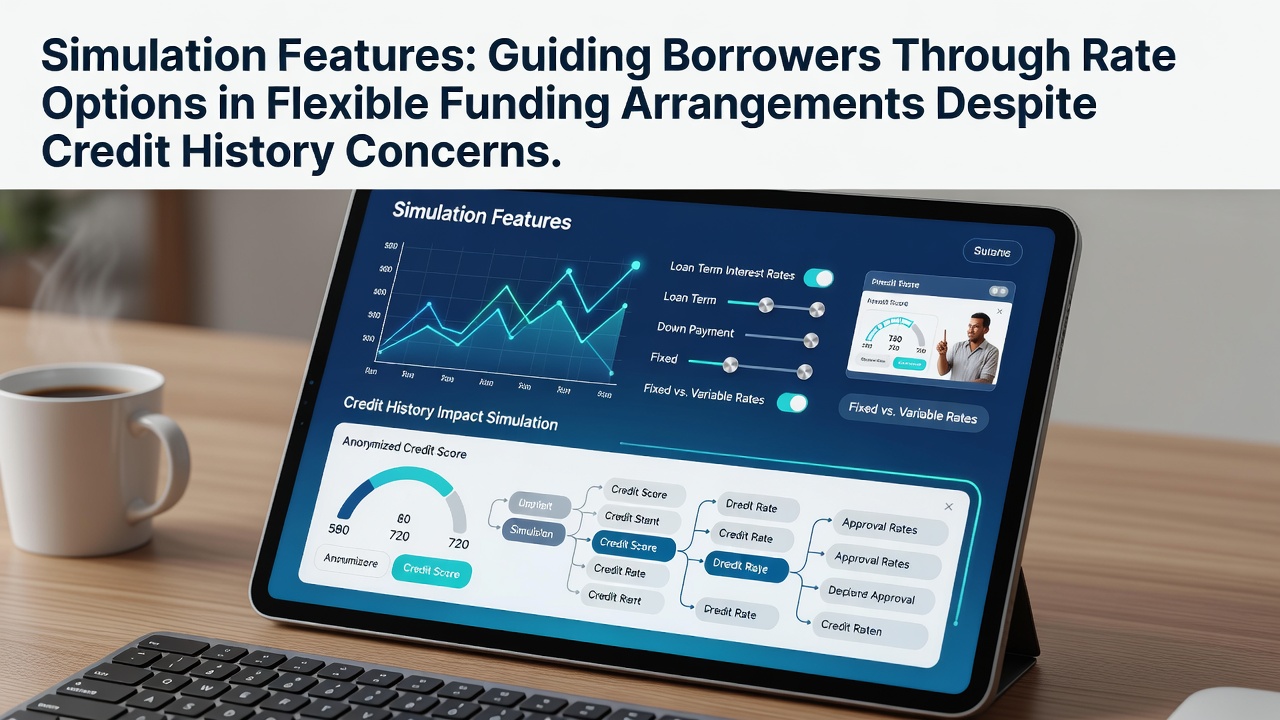
Digital Modeling Systems Assisting Borrowers in Evaluating Interest Rate Choices Within Adaptable Lending Structures Despite Prior Credit Challenges
Simulation features now form a central part of many lending platforms, allowing borrowers to test various interest rate scenarios before committing to any agreement, and these tools operate even when applicants present credit histories that fall outside conventional approval thresholds. Data from financial service providers shows that such modeling systems process inputs including loan amounts, repayment timelines, and projected rate fluctuations to generate side-by-side comparisons that remain accessible throughout the application process.
Core Mechanics of Rate Simulation Interfaces
These systems rely on algorithmic engines that incorporate current market benchmarks alongside lender-specific parameters, and users enter details such as desired principal sums or preferred monthly outlays while the software adjusts outputs in real time. Research conducted by institutions tracking consumer finance trends indicates that simulation accuracy improves when platforms integrate live feeds from central banking data sources, enabling projections that reflect conditions observed through mid-2026.
Observers note that adjustable funding arrangements often include tiered rate structures where initial periods carry fixed percentages before transitioning to variable calculations, and simulation tools allow borrowers to map payment trajectories across both phases without requiring direct lender consultation at every step. Figures released by regulatory bodies in Canada during 2025 highlight increased adoption of these interfaces among applicants whose credit scores sit below standard cutoffs yet demonstrate stable income patterns.
Integration wth Credit Assessment Protocols
Flexible funding channels frequently combine simulation outputs with automated credit reviews that weigh multiple data points beyond traditional scores, and this layered approach permits rate option exploration even when negative entries appear on reports. According to reports from the European Banking Authority, platforms employing such combined methods recorded measurable uptake among subprime segments in several member states through the first half of 2026.
Those who study digital lending patterns point out that simulation features sometimes include sensitivity sliders for variables like inflation adjustments or employment stability metrics, which helps borrowers visualize how external economic shifts might alter future obligations. One documented case involved a mid-sized lender in Australia where integration of these controls coincided with a documented rise in completed applications from individuals with recent credit events.

Practical Application Across Different Lending Segments
Personal installment products, vehicle financing packages, and certain revolving credit lines now embed simulation modules that update dynamically as borrowers adjust inputs, and these modules often flag rate bands that align with the applicant's reported cash flow patterns. Data compiled by academic researchers at several North American universities demonstrates that users who engage with simulation tools prior to formal submission tend to select terms with lower cumulative interest exposure over the full repayment horizon.
What's interesting is how some platforms extend simulation access to pre-qualification stages, allowing rate previews without triggering hard credit inquiries, and this practice aligns with guidelines issued by the Consumer Financial Protection Bureau in the United States. Borrowers can therefore explore multiple scenarios across different lenders while maintaining control over when formal applications occur.
Emerging Trends Observed in August 2026
Platform updates rolled out during August 2026 introduced enhanced visualization layers that display rate paths alongside probability estimates derived from historical borrower cohorts with similar profiles, and these additions appear particularly useful for applicants concerned about credit history impacts. Industry reports indicate continued refinement of these probability models through partnerships with data analytics firms that maintain anonymized datasets spanning multiple economic cycles.
Yet the core value remains the ability to compare fixed versus variable options side by side, with clear breakdowns of how each path affects total repayment amounts under different market conditions. Experts tracking these developments note that simulation features continue to expand into mobile applications, widening access for borrowers who manage applications outside traditional banking hours.
Conclusion
Simulation capabilities have become standard components within many flexible funding environments, providing borrowers with credit history concerns concrete ways to examine rate alternatives before finalizing arrangements. Continued integration of live data feeds and expanded visualization options suggests these tools will maintain relevance as lending practices evolve through the latter half of the decade.