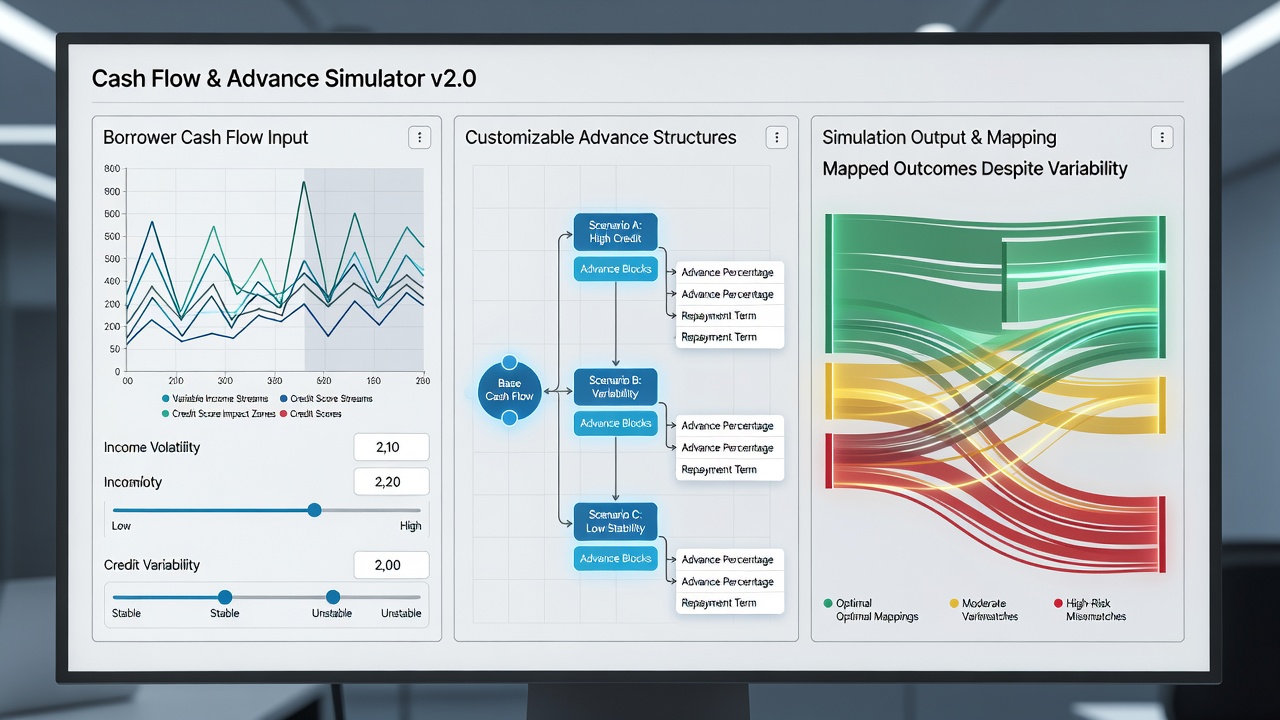
Online Simulators Facilitating the Alignment of Borrower Income Flows with Flexible Advance Configurations Regardless of Credit History
Digital platforms have expanded in recent years to help borrowers connect their income patterns with adjustable advance options even when credit records show variability, and these tools operate through structured simulators that process cash flow data alongside repayment variables. Observers note that such systems accept inputs like monthly revenue streams, expense categories, and irregular payment histories then generate multiple advance structures that adjust timing and amounts accordingly.
How Simulators Process Cash Flow Data
Simulators collect details on incoming funds from wages, freelance payments or other sources then compare those against outgoing obligations such as rent, utilities and existing debt service, while algorithms adjust projections for seasonal fluctuations or one-time events. Research indicates these calculations occur in real time and produce scenarios that remain viable despite gaps in traditional credit metrics. Data from the Consumer Financial Protection Bureau shows increased use of these modeling features among applicants who report inconsistent earnings yet maintain steady deposit activity.
Users enter figures for expected inflows and outflows then review generated options that might include shorter advance periods with higher initial draws or extended terms that spread smaller increments across multiple cycles. The process incorporates buffers for unexpected shortfalls and recalculates totals when new income data gets added mid-application.
Accommodating Credit Variability in Advance Structures
Credit variability appears in records through late payments, collection accounts or thin files yet simulators separate these elements from cash flow projections so that advance eligibility rests primarily on demonstrated ability to meet proposed schedules. Figures reveal that platforms update risk models quarterly to reflect broader economic shifts and individual transaction patterns rather than relying solely on static scores. By October 2026 many systems will incorporate additional variables such as gig economy deposits and automated savings transfers to refine accuracy further.
Key Features Found in Current Tools
- Real-time recalculation when income entries change
- Multiple repayment timelines displayed side by side
- Integration with bank feeds for verified cash flow history
- Scenario testing for different advance amounts
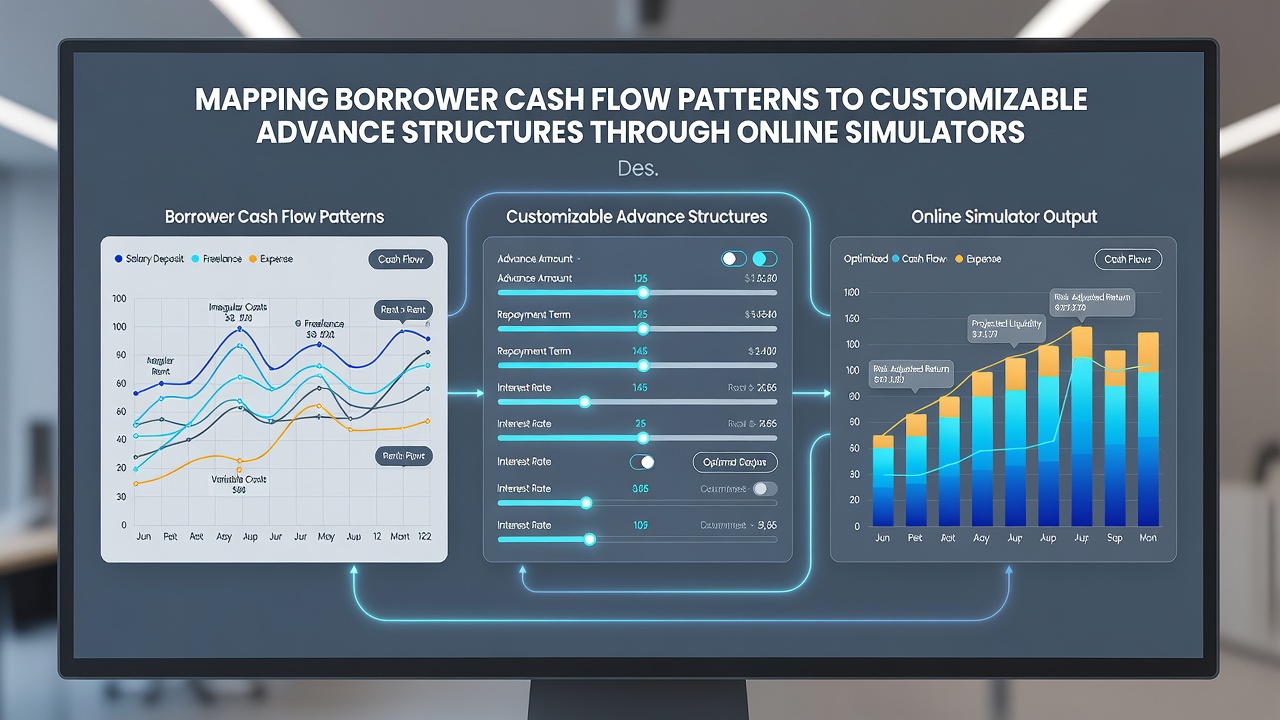
Those who have examined platform outputs note that customization extends to selecting payment dates that align with direct deposit arrivals or choosing structures that front-load smaller sums during low-income months. External data sources such as transaction histories help confirm the projections without requiring perfect credit standing.
Practical Applications Across Borrower Profiles
Take one case where an individual with variable freelance income used simulator outputs to match advance draws with project completion payments and thereby avoided mismatches that had occurred under fixed-term products. Another example involves seasonal workers who input historical deposit data to generate advance schedules that pause during off-peak periods and resume when revenue returns. Studies from the Federal Reserve Bank of New York indicate that such alignment reduces instances of missed installments among participants who previously relied on rigid loan formats.
Platforms also allow comparison of total costs across options so users see how different timing affects overall repayment sums while keeping structures responsive to credit variability. The underlying models draw from aggregated anonymized datasets that include both high and low credit score cohorts to ensure broad applicability.
Integration with Banking Systems and Data Sources
Secure connections to financial institutions supply verified cash flow records that replace manual entry in many simulators, and these links update automatically when new transactions post. According to reports from the Australian Securities and Investments Commission, verified data feeds improve projection reliability by reducing estimation errors that arise from self-reported figures alone. Borrowers receive visual summaries that break down proposed advances against projected balances over time.
Security protocols require encryption of all transmitted data and limit simulator access to authorized sessions, while audit trails record every adjustment made during the modeling process. These safeguards support compliance with existing lending regulations without restricting access based on credit history alone.
Conclusion
Online simulators continue to evolve by refining how cash flow inputs translate into customizable advance terms that function effectively even when credit records contain variability. The combination of real-time processing, verified data feeds and scenario testing provides structured pathways for borrowers to evaluate options before committing to any particular advance structure. As platforms incorporate additional data layers through 2026 and beyond, the mapping process gains precision while remaining accessible across diverse financial situations.