
When Earnings Don't Follow a Straight Line: Tools That Help Match Quick Funding to Shifting Pay Patterns
Workers in gig platforms, seasonal industries, and shift-based roles often see income arrive in uneven bursts rather than steady weekly deposits, and financial tools have emerged to map those patterns against repayment obligations in real time. Data from labor market surveys released in November 2026 shows that roughly 36 percent of U.S. adults receive at least part of their earnings through variable channels, creating demand for systems that synchronize short-term advances with projected cash inflows.
Mapping Variable Income Streams
Traditional underwriting models assume consistent paychecks, yet payroll records from multiple sectors reveal wide swings in weekly totals. Researchers at the Federal Reserve Bank of New York documented that ride-share drivers experienced month-to-month earnings changes exceeding 25 percent in more than half of observed cases during 2025. Digital platforms now ingest bank transaction histories, calendar data, and platform payout schedules to generate forward-looking cash-flow projections that adjust funding amounts and timing automatically.
Core Components of Alignment Software
These systems combine several modules that operate together. Transaction parsers categorize deposits by source and frequency, while forecasting engines apply seasonal adjustments drawn from historical data sets. Repayment schedulers then test multiple advance scenarios against projected balances, highlighting dates when available funds are likely to cover installments without triggering overdraft risks. Users receive side-by-side comparisons that display total interest under each option, allowing selection based on actual inflow timing rather than averaged estimates.
One platform processes data from over 12,000 financial institutions and updates projections daily, shortening the gap between income receipt and funding decisions from several days to minutes. Another integrates with employer payroll APIs in select industries, pulling scheduled shift data weeks in advance to refine accuracy further.
Practical Applications Across Sectors
Delivery drivers in metropolitan areas use these calculators to time advances against weekend surge payouts, while hospitality staff align draws with event-driven tip cycles. Construction subcontractors input project completion estimates to match equipment financing draws with milestone payments. In each instance the software recalibrates when new deposits arrive, maintaining alignment even if actual figures deviate from initial forecasts.
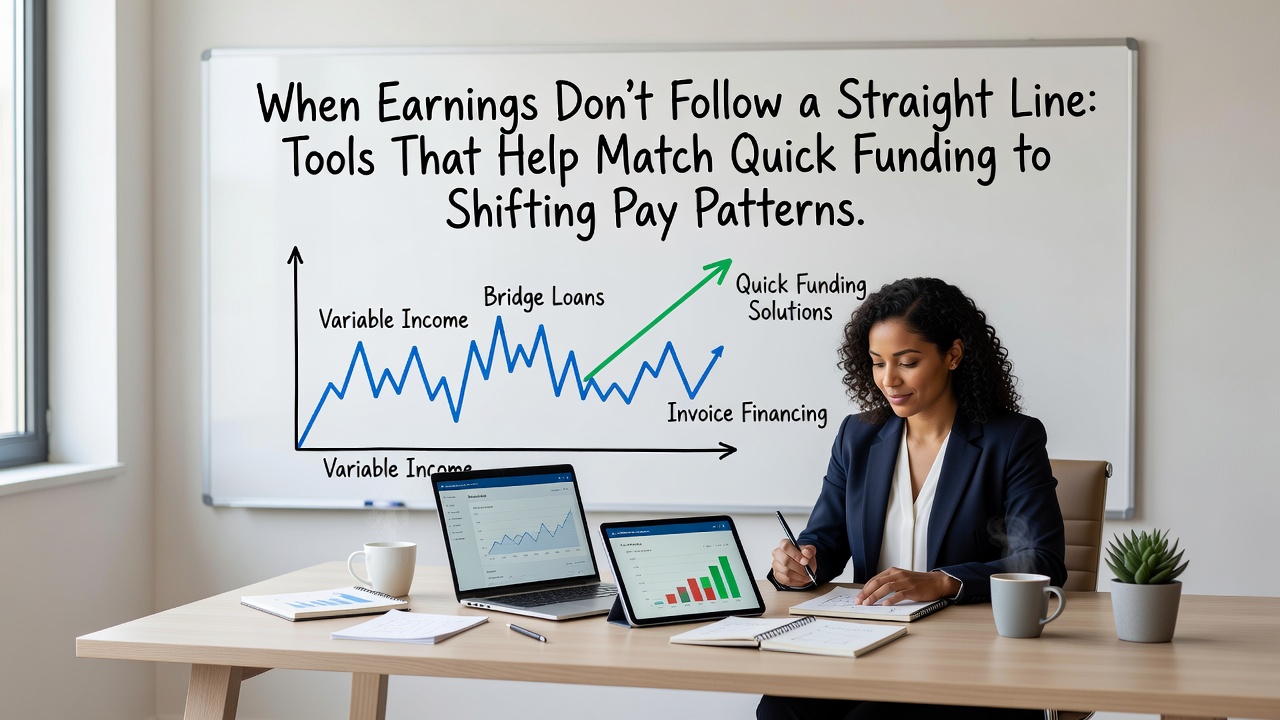
Studies compiled by the Consumer Financial Protection Bureau indicate that borrowers who employed such modeling tools reduced instances of missed payments by 18 percent compared with those relying on static schedules during the 2024-2025 observation window. The same analysis noted that advance sizes stayed within 70 percent of projected inflows in 82 percent of modeled cases, lowering the likelihood of extended rollover periods.
Integration With Regulatory Frameworks
Financial authorities in multiple jurisdictions have begun evaluating these tools as part of broader responsible-lending reviews. The Australian Securities and Investments Commission published guidance in mid-2026 that encourages lenders to incorporate dynamic cash-flow modeling when offering products to applicants with documented income variability. Similar discussions continue at the Financial Consumer Agency of Canada, where pilot programs test whether real-time alignment features improve borrower outcomes across credit-constrained segments.
Implementation varies by region because data-privacy rules differ. European providers must obtain explicit consent before linking multiple bank feeds, whereas U.S. platforms often rely on existing account-linking standards under Regulation E. Despite these differences the underlying logic remains consistent: convert irregular deposit histories into probabilistic repayment windows that update continuously.
Limitations and Ongoing Refinements
Forecast accuracy depends on the length and completeness of available transaction histories, and new entrants to variable-income work can encounter wider confidence intervals until several months of data accumulate. External shocks such as platform policy changes or sudden demand drops still require manual overrides. Developers continue to incorporate machine-learning layers that detect early deviations and prompt users to adjust projections before repayment dates arrive.
Industry reports from the World Bank’s financial inclusion unit note that adoption rates climbed steadily through 2026, with usage concentrated among workers aged 25-44 who maintain multiple income sources. Continued iteration focuses on expanding API coverage to smaller payroll providers and improving mobile interfaces for users who access services primarily through smartphones.
Conclusion
Systems that match quick funding to shifting pay patterns operate by converting historical and scheduled income data into dynamic repayment models that adjust as new deposits post. Evidence from regulatory and academic sources shows measurable reductions in missed payments when borrowers apply these projections, although outcomes still hinge on data quality and timely updates. As labor markets retain flexible arrangements, the underlying technology continues to evolve in tandem with available transaction sources and regional compliance requirements.